
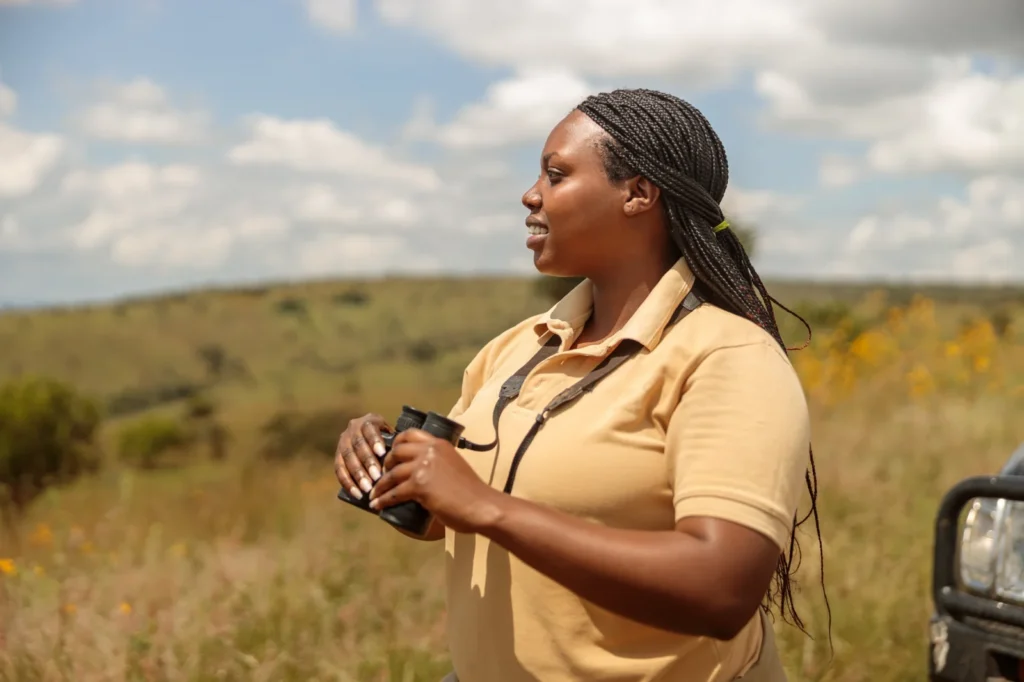
A teenager is more likely to feel part of the journey when they have helped shape something that matters to them. Ask about their interests before deciding that safari will either delight them automatically or compete with their phone. Photography, wildlife questions, a different landscape or time at the coast may provide the starting point. Their answer should influence the plan.
Offer real choices within the available trip
Give two or three decisions that can genuinely be influenced: the balance of active time and rest, an interest to explore with the guide or an optional activity that is suitable and available. Explain the fixed elements too, such as flight dates and the family’s overall route.
Avoid offering a choice that will later be withdrawn simply because it was never checked. Walking, marine experiences and other activities can have age, access and operating requirements. Establish whether an option is feasible before making it the centre of the teenager’s expectations.
The Family Safaris page covers the broader arrangements. For older children, the useful addition is participation in decisions rather than a programme designed entirely on their behalf.
Give an interest a practical role
| Interest | A possible role during the trip | Keep the expectation realistic |
|---|---|---|
| Photography or video | Choose a subject or visual theme for an outing | No guaranteed scene and no intrusive filming |
| Wildlife identification | Ask the guide to explain a few visible clues | Uncertain identifications can remain uncertain |
| Maps and travel | Help understand how the day’s movement fits the route | The guide still controls navigation and operations |
| Drawing or writing | Keep a personal record of selected observations | It need not become assessed work or a compulsory journal |
| Food or culture | Bring questions for an appropriately arranged experience | Respect permission and the people involved |
| Mainly relaxation | Help decide where genuine downtime belongs | Every family member can enjoy the trip differently |
These are ways to engage with an existing journey. They do not imply that a camp provides a particular youth programme or specialist activity.
Discuss the guide relationship
A teenager may be more comfortable asking their own questions than listening to a conversation conducted entirely between adults. Tell the guide what interests the family and give the young person room to speak directly when they want to.
Avoid turning the drive into a continuous lesson. Some travellers enjoy detailed explanations; others prefer to watch first and ask later. The best brief leaves space for that difference.
If a particular language or specialist interest matters, include it in a private-guide enquiry. Availability and subject expertise need to be matched to the actual dates and itinerary rather than inferred from a general guiding description.
Agree how early starts and rest will work
Talk through the rhythm before travel: early departures where planned, time in the vehicle, meals and periods at the accommodation. Explain why some movements have fixed times and which parts may have flexibility.
Do not treat reluctance to join every outing as a failure to appreciate the trip. A longer safari can include choices, provided the arrangements are suitable. Ask what happens if a family member stays behind and who is responsible; a teenager’s preference does not override accommodation or supervision rules.
Leave enough time for ordinary life between activities. Being able to shower, organise belongings and rest can matter as much as adding another excursion.
Make phones and cameras part of an agreed plan
Agree expectations for device use as a family rather than assuming the safari itself will solve the issue. A phone can be a camera, a notebook or a way to stay in touch, but constant filming can also get in the way of watching.
Discuss respectful photography, particularly around people and other guests. Do not record private conversations or assume permission because a guide is present. Within the vehicle, equipment should not block another passenger’s view or movement.
Check charging and connectivity where they matter, without promising reliable access throughout the route. Downloading appropriate offline material before travel can be useful; an essential school or work commitment needs a realistic arrangement of its own.
Confirm the room and activity basis for the actual ages
Older children may want greater privacy, but the property’s occupancy rules and the layout determine what is possible. Confirm the proposed beds, bathrooms and connection between sleeping spaces.
Do not assume a teenager is priced or treated as a child across accommodation, flights and protected-area access. Those components may use different rules. Family pricing must be prepared for the actual ages and arrangement, not inferred from an adult-sharing headline.
For optional activities, check eligibility and the final conditions separately. A teenager’s enthusiasm is valuable, but it is not confirmation that an experience is suitable or included.
Leave room for an interest to change
The activity someone expected to enjoy most may not become their favourite. Keep the plan open enough for a new interest, a quieter day or a different way of recording the experience.
A useful family brief includes what each teenager wants from the trip and where they are uncertain. That lets the planner make recommendations without promising that every hour will be entertaining. The journey works best when participation is meaningful and expectations are shared.
Questions and answers
Does the safari need a special programme for teenagers?
Not necessarily. A suitable pace and room for their interests may be enough. Any dedicated programme or specialist activity should be checked separately.
Will a teenager qualify for child pricing throughout the trip?
Do not assume one age rule covers every component. The quotation needs to use the actual ages, room occupancy, flights, fees and vehicle arrangement.
Can my teenager skip an outing independently?
That depends on the accommodation’s rules and the family’s confirmed supervision arrangement. Discuss it before relying on that flexibility.