
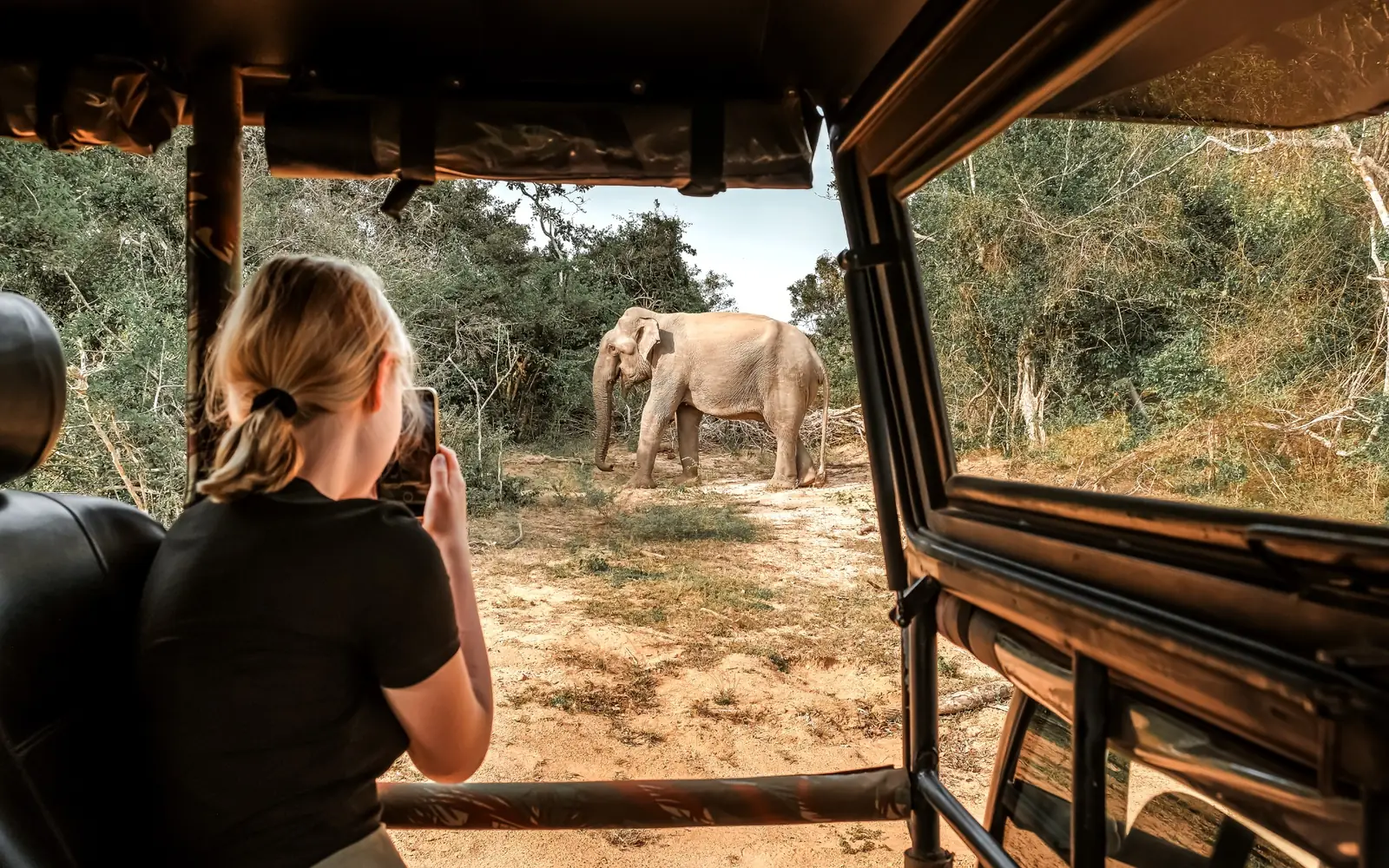
A shared safari vehicle can include a keen photographer, someone using a phone and a traveller who would rather watch without a camera. A good outing gives those interests room without treating the largest lens as the main booking. The practical work begins with a clear brief and a considerate use of the space you share.
Describe the kind of photography you want
There is a difference between taking photographs during a game drive and wanting the drive organised around photography. Explain which you mean when booking.
If you would like occasional time for a composition, say so. If you need long waits, repeated visits to one subject, specialist support or control over every departure, ask whether the proposed shared arrangement can realistically meet that brief.
Do not assume that a camp drive becomes a photographic departure because one guest brings extensive equipment. The quotation and activity description should make the arrangement clear. The private safari guide explains exclusivity if your requirements extend beyond a shared outing.
Agree the basics before the first sighting
Ask the guide how seats, viewing positions and equipment are managed. A vehicle may have particular access and safety constraints, so an informal seat swap should not be assumed possible while driving.
Introduce the main interests within the group without turning it into a negotiation over every stop. A short conversation can reveal whether several people want the same subject or whether some would prefer a different pace.
If you need help with a practical feature, ask early: where a bag can sit, whether a support is suitable and what must be secured during movement. The transport guide gives the wider context; the actual vehicle determines the available working space.
Keep equipment inside your share of the space
| Equipment habit | Why it helps |
|---|---|
| Keep a bag where the guide has agreed | It avoids blocking a seat, doorway or another person’s feet |
| Control straps and loose items | They are less likely to swing into people or obstruct movement |
| Ask before attaching a support | The vehicle may not have a suitable or permitted mounting point |
| Secure equipment before the vehicle moves | A repositioning should not become a scramble with loose cameras |
| Use a compact working setup where practical | It leaves more room for other guests to observe comfortably |
| Tell people before changing position | It avoids surprising someone who is also composing a photograph |
None of these habits replaces the guide’s instructions. They make it easier to share the vehicle within those instructions.
Share the view without choreographing the animal
When a sighting is visible on one side, avoid leaning across another passenger or filling their view with equipment. Ask the guide whether a different safe position is practical, and allow other guests time to look.
The answer may be no. Terrain, local rules, other vehicles and the animal’s position can prevent an equal view from every seat. A shared outing cannot promise every passenger an identical photograph.
Do not ask for a move that crowds an animal, blocks its path or breaks an access rule. Nor should a group agree to call or otherwise prompt a reaction. The animal’s behaviour remains outside the vehicle’s arrangements.
Make requests specific and proportionate
“Could we pause here briefly if it is practical?” is easier for the guide to assess than a general demand for more photography time. If you are waiting for a particular composition, explain what you are trying to achieve and accept that it may not develop.
The guide also needs to consider other guests, the return plan and the value of remaining at one sighting. A long lens does not create a stronger claim on the group’s time than binoculars or unaided viewing.
If the plan repeatedly does not fit your needs, discuss the issue away from a sighting. A separate or exclusive arrangement may be possible for another outing, subject to availability and cost. Do not assume it can be supplied immediately or without changing the booking.
Leave room for the non-photographer
Someone watching without a camera may want silence, interpretation or time to observe the whole scene. Avoid filling every quiet period with technical discussion unless the group welcomes it.
For couples and families, agree that not every stop needs to satisfy the keenest photographer. Others may enjoy a shorter outing, a meal break or a different subject. Those preferences can be discussed before fatigue turns them into conflict.
You may also find that putting the camera down improves the experience. A shared drive can be a useful reminder that the photograph is one way of engaging with wildlife, not the only reason to be there.
Choose the arrangement that matches the brief
A shared drive is a reasonable choice when you are comfortable with a group pace and occasional compromises in viewing position. An exclusive vehicle is worth considering when photography requires substantially more control over your party’s time.
Neither guarantees a sighting, light or access to a particular angle. Ask for the actual vehicle, guide and activity basis, then decide which compromises you are happy to make. Clear expectations before travel are easier than trying to convert a shared drive into another service at the first stop.
Questions and answers
Can I reserve the best photography seat?
Ask what seating arrangements the provider offers. Do not assume one seat has the best view throughout a changing route, or that it can be reserved without confirmation.
Will the guide stop the engine whenever I want a photograph?
You can explain the request, but the guide decides what is practical and appropriate in that location and situation.
Does bringing a large camera mean I need a private vehicle?
Not necessarily. The main question is how much control over space, waiting and outing rhythm you require. Match the booking to that brief rather than to camera size alone.