
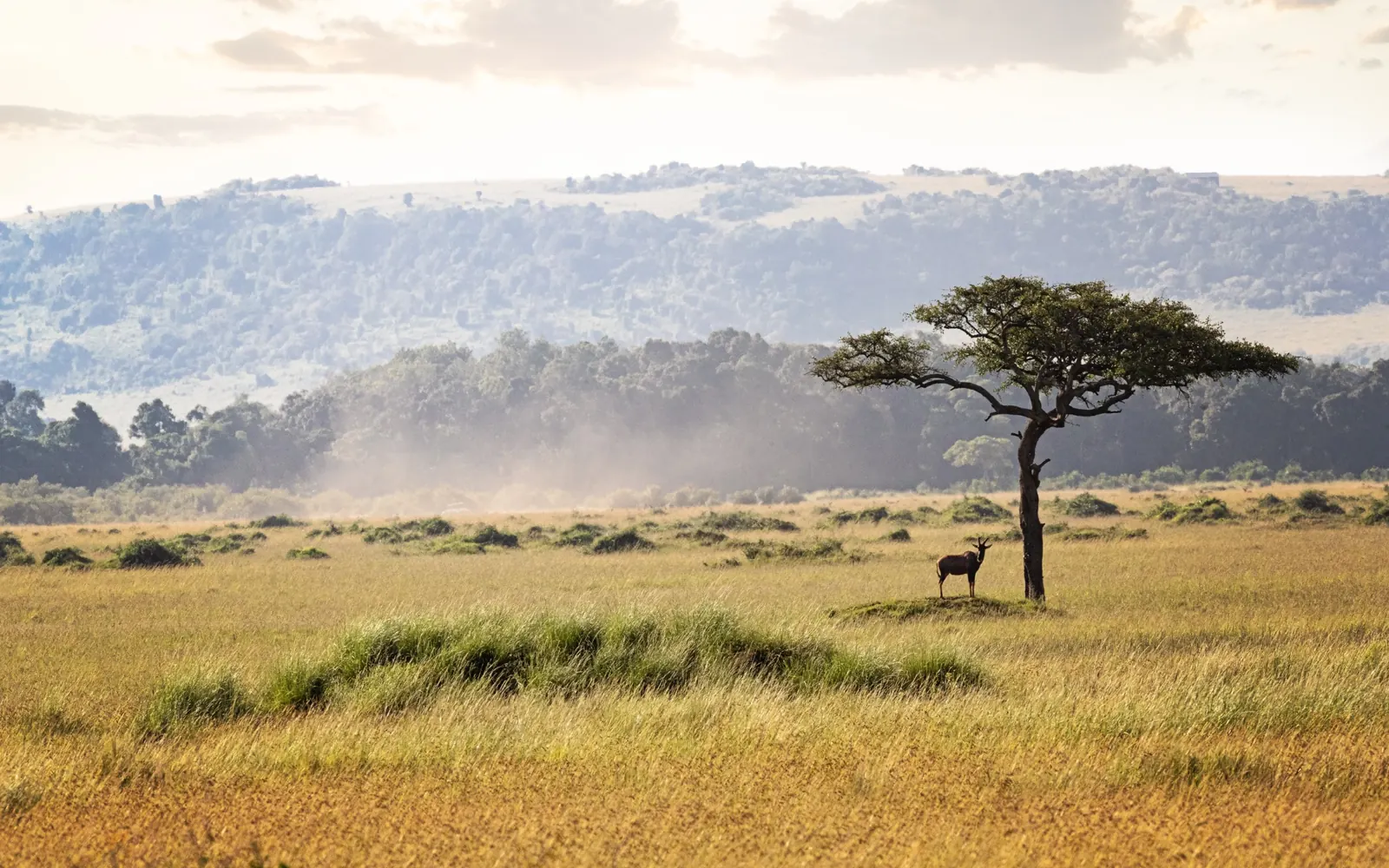
An interest in birds does not have to turn a general Kenya safari into a specialist expedition. It can begin with a few well-explained observations woven into the normal outing. The important part is agreeing how much time you want to spend, what the guide can offer and how those stops will work for the rest of the vehicle.
Say whether you want an introduction or a specialist focus
A beginner may want help noticing shape, movement and a few recognisable features. An experienced birder may want a much more detailed programme, particular habitat time or specialist interpretation. Those are different briefs.
Explain your level of interest before booking. Ask whether the proposed guide and activity arrangement suit it rather than assuming every safari guide offers the same depth in every subject.
Language and specialist knowledge are separate questions. Magical Exploits can arrange private guiding in English, German, French and Spanish, subject to guide availability for the dates and itinerary. A requested language does not by itself establish birding expertise.
Give the non-birders a workable part in the plan
Ask the group what kind of stops they would enjoy. Some travellers may welcome a few introductions but not a long search for one small subject. Others may become interested once they understand what they are seeing.
Begin with clear, accessible observations rather than trying to impress people with a long list of names. Let someone locate the bird, describe its position or notice a behaviour before supplying the identification.
If the party has sharply different priorities, discuss whether any separate activity is realistically available. Do not assume a second guide, vehicle or supervision arrangement is included. A shared outing needs a shared understanding of how the time is used.
Use habitat to broaden the view
Kenya’s different safari settings create useful opportunities to look at birds in context: an open landscape, riverine vegetation or a wetland edge can give you different things to notice. The destinations guide helps put those landscapes into the route.
That is not a species promise. Ask the guide what can be observed in the actual area on the day, without treating a habitat label as a checklist of birds that must be present.
On a mixed-interest drive, habitat can provide common ground. One traveller may photograph the wider landscape while another watches a bird within it. The stop then has more than one purpose without needing to satisfy everyone in exactly the same way.
Make a small observation useful
| First step | Why it helps |
|---|---|
| Locate the subject against a clear reference point | Other passengers can find it without everyone pointing in different directions |
| Look at shape and relative size | You have something to discuss even before an identification |
| Notice the bill, legs and visible markings | The guide can explain which features are useful in that view |
| Describe what it is doing | Behaviour becomes part of the observation rather than a guessed story |
| Record uncertainty | An incomplete view does not need a forced species label |
A short note can be as useful as a photograph. If the view is poor, leave the identification open and continue the outing.
Keep equipment and observation considerate
Binoculars are useful when you can handle them comfortably from your seat. Locate the bird with your eyes first, then bring the view into the binoculars. Share equipment only when that can be done safely and without disrupting another passenger.
Ask what equipment, if any, the guide provides. Do not assume there are binoculars for everyone or that a specialist field guide is included in a general drive.
Avoid calling birds in, playing recorded calls or approaching a nesting or resting site to improve the view. Let the guide manage the observation within the area’s rules. Curiosity is better served by a natural encounter than by trying to manufacture one.
Keep a modest record of the experience
Instead of setting a target number, choose a few observations worth remembering. Note the location, the visible features and the identification suggested by the guide. If you are uncertain, preserve that uncertainty.
A family might enjoy choosing one subject to discuss over lunch. A photographer might keep a wider image showing the habitat as well as a detail. An experienced birder may maintain a fuller record without making the entire vehicle participate.
The aim is to give the interest space, not require every traveller to take up the same hobby.
Ask for the right guiding arrangement
Use Private Guides to describe your interest, the route, dates, preferred language and the depth of interpretation you want. Ask which parts can be incorporated into a general safari and which would need a separately confirmed arrangement.
For the language side of the brief, the guide to planning a visit in your preferred language explains the questions to settle. Keep the subject expertise equally clear.
A well-matched general safari can make birdwatching part of the day without promising a specialist tour or a particular species. That leaves room for both discovery and the other reasons your party came to Kenya.
Questions and answers
Do we need to be experienced birdwatchers?
No. Say that you want an introduction and ask for a suitable guiding approach. A few clear observations can be more useful than a long list of names.
Will the camp provide binoculars for everyone?
Only if that provision is confirmed. Ask about equipment before travel rather than assuming it is included.
Can a general safari guarantee a bird I particularly want to see?
No. Share the interest so it can be considered, but habitat and guiding do not guarantee a particular encounter.