
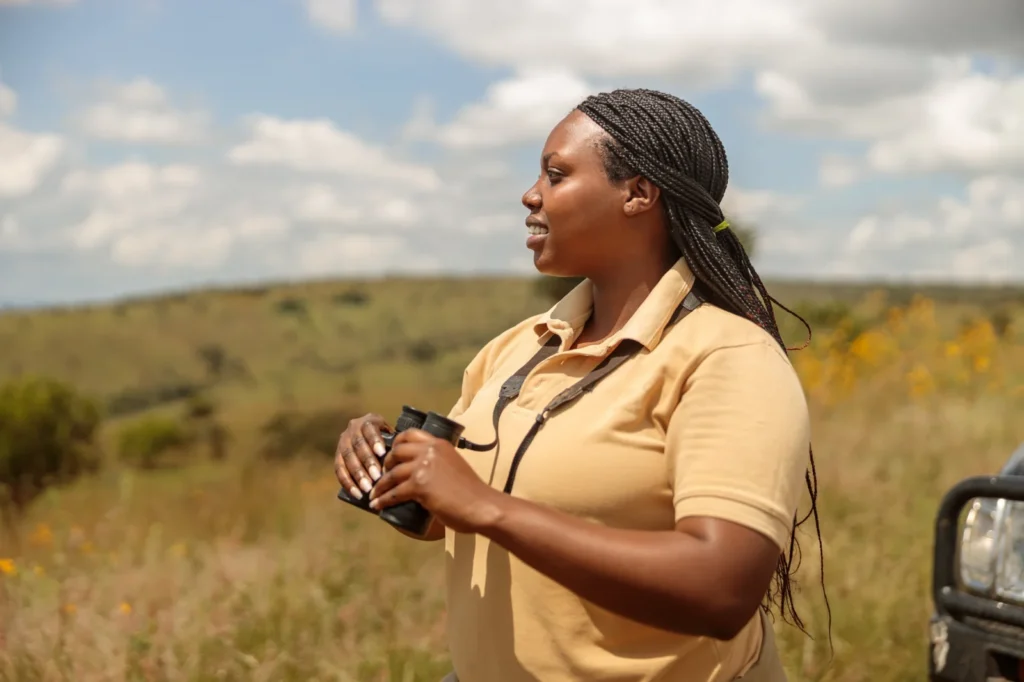
Exclusive use of a safari vehicle can change the way you experience a day. Your party can discuss its interests with the guide without also balancing the preferences of unrelated guests. That can be valuable for families, photographers and travellers who prefer a particular pace.
It is still an agreed service within a real place, with access rules, operating hours and practical limits. Before paying for it, establish exactly what is private and which parts of the journey the arrangement covers.
Define the scope of exclusivity
Ask whether the quotation includes an exclusive vehicle for game drives, road transfers or both. On an itinerary with flights and several camps, the arrangement may change from one location to the next.
A privately arranged journey can still include scheduled flights, shared camp activities or shared transfers if that is how it has been quoted. The word “private” should therefore be attached to a specific service rather than assumed to describe everything.
The private safari page explains the broader style. For the vehicle decision, request a clear statement of the dates, outings, passengers and guiding arrangements covered.
Where the difference is most noticeable
A family may want to shorten an outing around a child’s needs. A photographer may prefer patient observation at one sighting. A traveller with a strong interest in birds may want more time for smaller subjects rather than moving quickly between larger animals.
An exclusive vehicle can make those conversations easier. The guide can plan with your party’s priorities in mind, while still responding to wildlife, conditions and the rules of the location.
The benefit is not necessarily more hours outside. It can be a day that fits you better. A shorter, well-chosen outing may be more enjoyable than a long drive undertaken because the rest of a shared group wants it.
The landscape remains shared
A private vehicle does not mean a private reserve, an empty conservancy or exclusive access to an animal. Other authorised visitors may be present. Wildlife can move away, remain distant or be absent.
It also does not remove restrictions on where vehicles may go. Off-road access, night activities and walking arrangements depend on the actual location and permissions. None should be inferred from vehicle exclusivity alone.
For Mara stays, separate this question from reserve and conservancy location choices. Where you stay and how your vehicle is allocated are related decisions, but they are not the same thing.
Flexibility still needs an agreed framework
Ask how departures, meal breaks, full-day outings and return times are arranged. A guide has operational responsibilities, and the vehicle may have constraints that are not obvious from a brochure.
If you hope to change the day while out, discuss what is realistic. A return to camp may affect the remaining outing. Splitting the party requires more than an empty seat: separate transport or another activity arrangement may be needed.
For families, make the supervision plan explicit if some people remain at the accommodation. For photographers, discuss equipment space and how it can be carried safely without obstructing access or other passengers.
Compare the actual seating and luggage setup
The vehicle’s advertised capacity is not the only useful number. Ask about the seating layout for your party, access to viewing positions, and where luggage travels on transfer days.
A group with camera bags, large suitcases or mobility equipment may need a different arrangement from the same number of people travelling lightly. Give approximate bag sizes and relevant boarding requirements before the quote is finalised.
Do not infer an exact vehicle model or configuration from a general service photograph. The operational image may be authentic brand imagery while the vehicle allocated to your dates still needs to be confirmed.
Private does not automatically mean specialist guiding
A guide can shape an outing around your interests, but specialist requirements should be stated. Birding expertise, a particular language or an intensive photography brief may affect who is suitable and available.
Magical Exploits offers private guiding support, including English, German, French and Spanish subject to guide, date and route availability. That does not mean every guide speaks every language or holds an unadvertised specialist qualification.
Describe what you want to learn and how much detail you enjoy. A precise brief is more useful than assuming that the vehicle’s exclusivity answers every guiding question.
When shared arrangements may suit you
If you enjoy meeting other travellers and are comfortable with the offered schedule, a shared outing may be a good fit. Compare the actual group arrangement, not a caricature of shared travel as rushed or impersonal.
An exclusive vehicle may be less important if your interests match the normal programme and you do not need substantial control over pace. It may be more important when a specific practical requirement would be difficult to accommodate within a shared day.
| Your priority | What to confirm |
|---|---|
| Flexible family rhythm | How shorter outings and returns work |
| Photography | Time preferences, equipment space and guiding brief |
| Language | Availability for the specific dates and route |
| Reduced sharing | Exactly which drives and transfers are exclusive |
| Different interests within the party | Whether separate activities require extra arrangements |
Questions travellers ask
Can we decide our own route in a private vehicle?
You can discuss priorities with the guide, but access rules, conditions, wildlife and the agreed programme still determine what is possible. Private use is not permission to go anywhere.
Does a private vehicle guarantee better sightings?
No. It can improve how the day fits your interests, but animals and viewing conditions remain unpredictable.
Will we have the same guide throughout Kenya?
Only if that is the confirmed arrangement. Flights, destination changes and camp-based activities can involve different teams. Ask who accompanies or meets you at each stage.
Is it worth it for a couple?
It may be if control over pace, observation time or a specific requirement matters strongly. Compare that benefit with other uses of the budget, such as an extra night or a different transfer arrangement.