
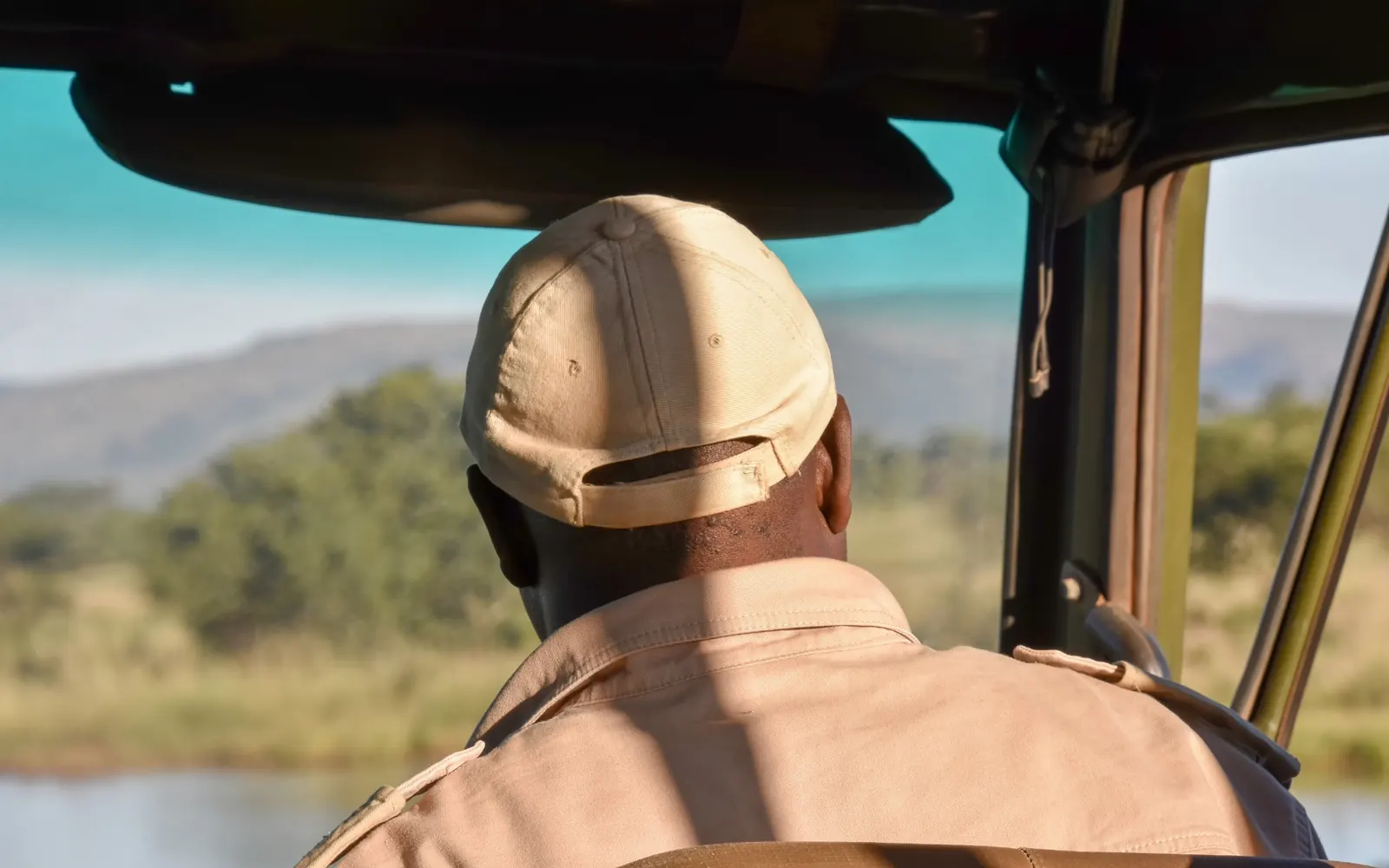
The vehicle collecting you at an airport may be different from the one used for a game drive. A road safari may use a vehicle with a pop-up viewing roof, while a fly-in stay may use the camp’s open-sided vehicle. None of those descriptions tells you everything about seating, luggage, weather protection or getting in and out. Ask about the actual arrangement for each movement.
Separate the transfer from the wildlife outing
A transfer has a practical destination: your accommodation, an airport or the next safari base. A game drive is organised around wildlife viewing within the time, access and operating conditions available.
The vehicle that works well for one purpose may not be the arrangement used for the other. A closed road-transfer vehicle can offer shelter for a longer movement; an open viewing vehicle can make observation easier in a wildlife area. That is not a promise that either will be used on your trip.
Read the itinerary leg by leg. “Safari vehicle included” should lead to a useful description of where that vehicle is used, rather than an assumption that the same configuration follows you from international arrival to the coast.
What the main descriptions usually refer to
| Description | Physical feature to understand | Questions still needed |
|---|---|---|
| Open-sided safari vehicle | An open viewing arrangement around the passenger area; a roof or canopy may still be present | Side protection, seat access, restraints, luggage placement and suitability for the proposed movement |
| Pop-up-roof safari vehicle | A roof section opens for viewing when used as instructed | Which seats have useful viewing access, window arrangement and how the vehicle is used during transfers |
| Closed transfer vehicle | An enclosed passenger cabin intended for the agreed road movement | Actual seating, luggage capacity, cooling and any access requirements |
These are broad descriptions, not standard specifications. Two vehicles carrying the same label can have different seat layouts and equipment. Ask for the relevant vehicle details or a current image if a physical feature is important to you.
Start with the occupied seats and the bags
A nominal seat count is not the same as a comfortable plan for your party and equipment. Ask how many guests will occupy the vehicle, where each person sits and where bags will go. Include the driver-guide and any additional staff in the practical discussion.
For a long road movement, suitcases or specialist equipment can change the arrangement. A fly-in safari may leave you with less luggage to carry, but the airstrip pickup still needs enough room for everything accepted on the flight.
If you are travelling with children, ask about the actual seat and restraint arrangement for each type of movement. Do not infer child-seat compatibility from a generic vehicle photograph. Discuss any requested seat early enough for its availability and suitability to be checked.
Think about weather, dust and comfort
An open vehicle can expose you to moving air, dust, sun or rain in ways that an enclosed cabin does not. A roof or canopy does not necessarily provide side protection. Ask what weather protection is present and what clothing or covers you should bring.
For a closed vehicle, confirm rather than assume air-conditioning, window operation or other comfort features. The useful question is whether the proposed setup suits the route and the needs of your party.
Follow the driver-guide’s instructions about seating, roof use and movement in the vehicle. An opening provided for viewing is not permission to change position whenever you choose. Neither a roof style nor a private booking removes the need for safe operation.
Ask practical photography questions
Tell the planner if photography is a major reason for the trip. You may want to understand the view from a seated position, the stability of a support point and where a camera bag can be kept without blocking anyone’s access.
Do not assume that a high roof automatically gives every passenger an unobstructed view or that equipment can be attached to the vehicle. Ask what is practical in the actual configuration and follow the guide’s direction at a sighting.
If the group has several photographers, discuss whether the occupied seat plan lets people use equipment comfortably. Paying for exclusivity addresses who shares the vehicle; it does not by itself change the physical layout.
Check boarding and access before arrival
For some travellers, the important feature is the first step rather than the roof. Ask about step height, available handholds, the route to the assigned seat and whether assistance or a suitable step can actually be provided.
If you use a mobility aid, give its relevant size and handling requirements during planning. A promise of general “assistance” is less useful than confirmation of the particular vehicle, boarding method and equipment arrangement. These details may differ between the airport transfer and the game-drive vehicle.
The transport planning guide provides the wider context for road and air movements. A clear vehicle brief should sit alongside that route decision.
Request a leg-by-leg description
Ask for a simple list covering your arrival transfer, road movements between bases, airstrip pickups, wildlife outings and final departure. For each, note the vehicle format, party size, luggage provision and any essential access or seating feature.
If you want an exclusive ground experience, the private safari guide explains that separate choice. Together, the physical vehicle description and the private/shared basis show much more than a single photograph of a safari vehicle.
Questions about this decision
Does a pop-up roof mean the vehicle is private?
No. Roof design describes the vehicle. Whether it is exclusive to your party is a separate booking detail.
Will I use the same vehicle throughout a fly-in safari?
Not necessarily. Different transfers and camp-based outings may use different vehicles. Ask for the arrangement at each stage rather than assuming continuity.
Can a vehicle photograph confirm access or luggage capacity?
Only to a limited extent. A photograph may show a configuration, but your party’s seat plan, equipment and boarding requirements still need specific confirmation.