
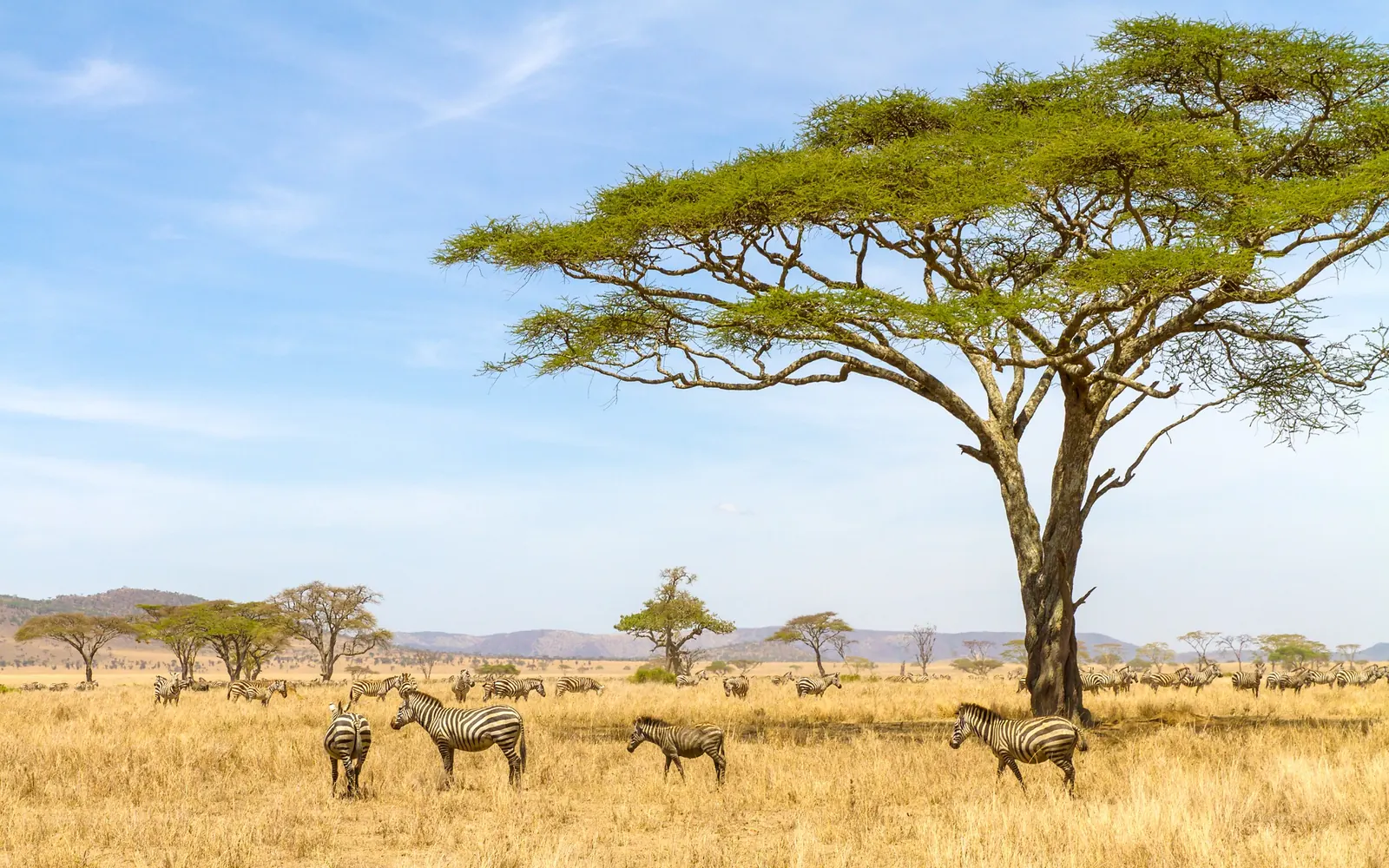
You can be excited about lions and elephants without making five sightings the scorecard for your whole safari. A broader brief gives the guide more ways to shape a rewarding day: a landscape you want to understand, birds you want to learn to notice, or time with an animal whose behaviour interests you. The aim is to add reasons to pay attention, not replace one compulsory list with a longer one.
Keep the wish list, loosen the success test
Tell your planner which animals particularly interest you. That information can help with route and guiding choices. Keep it separate from a condition that the trip must deliver every subject before it counts as successful.
Wildlife is not distributed to match a package description, and an animal’s presence in a region does not ensure it will be visible during your visit. A short stay can contain exceptional observations; a longer one can still miss a species you hoped to see.
The first-safari guide explains the wider experience. For your own brief, add two or three interests that remain worthwhile even when a particular animal is absent.
Choose interests that lead to different questions
| Interest | What it adds to a drive | A useful brief |
|---|---|---|
| Habitat | Attention to the setting around an animal | “Please help us understand how this area differs from the previous one.” |
| Behaviour | Time with ordinary activity instead of only identification | “We enjoy watching and hearing what can be interpreted from it.” |
| Birds | More subjects within the landscape | “We are beginners; a few clear observations matter more than a long list.” |
| Smaller visible wildlife | Interest beyond the largest mammals | “Please point out suitable subjects from the permitted viewing position.” |
| Landscape photography | An image can succeed without a close animal | “We would like time for wider scenes when the route allows.” |
| Field learning | A more active role for the traveller | “Explain the clues that help you identify what we are seeing.” |
You do not need every interest. Choose the ones you would enjoy spending time on, rather than the ones that sound most knowledgeable.
Use familiar animals to practise looking
A giraffe or zebra seen on several outings need not become background. Ask what is different about the setting, the visible behaviour or the view this time. An animal feeding near vegetation creates another observation from one walking across open ground.
Look at what can actually be seen. Avoid assigning emotions or family relationships without evidence. The guide’s explanation is more useful when it distinguishes a clear observation from a possibility.
This approach also works for a mixed-interest party. One person may enjoy the photograph, another the identification and another the shape of the landscape. A single stop can serve several interests without needing to become a specialist lesson for everyone.
Let habitat help you choose the route
Kenya’s safari regions are not interchangeable viewing rooms. The dry-country and riverine settings of the north, the Mara’s grassland character and Amboseli’s open plains and wetland context offer different ways to experience wildlife country.
Use the destinations guide to identify the setting that appeals, then assess whether the movements and nights fit your available time. Do not add a region solely to chase an animal missing from the first part of the trip.
A second habitat is valuable when you have enough usable time to notice the difference. If reaching it compresses every stay, fewer bases may leave more room for the very interests you wanted to develop.
Do not turn curiosity into a disturbance
A small subject does not justify moving closer without guidance. Stay within the permitted vehicle and activity arrangements. Do not handle wildlife, disturb a resting animal or ask the guide to produce a reaction for identification or photography.
If you become interested in walking, night viewing or a specialist activity, check whether it is actually offered and permitted for the area and your party. Those are separate arrangements, not benefits automatically created by a broader wildlife brief.
The same applies to expertise. A general safari can make room for an interest without becoming a dedicated scientific, photographic or birding programme. Explain the depth you want so the guiding arrangement can be assessed honestly.
Give everyone room to have a favourite
For families or friends, ask each person to choose one interest before travel. Keep the choices manageable: photographing patterns, watching how animals move, learning a few identifications or finding a landscape to sketch.
Revisit those choices during the trip. Someone who expected to care only about predators may discover an interest in birds or scenery; someone else may remain happiest watching familiar large mammals. There is no need to rank those preferences.
A useful enquiry might say: “We are excited about the larger wildlife, but would also like time for habitat interpretation and a few bird observations. We prefer unhurried stops to a long checklist.” That gives the guide a workable direction while leaving the experience open to what the day provides.