
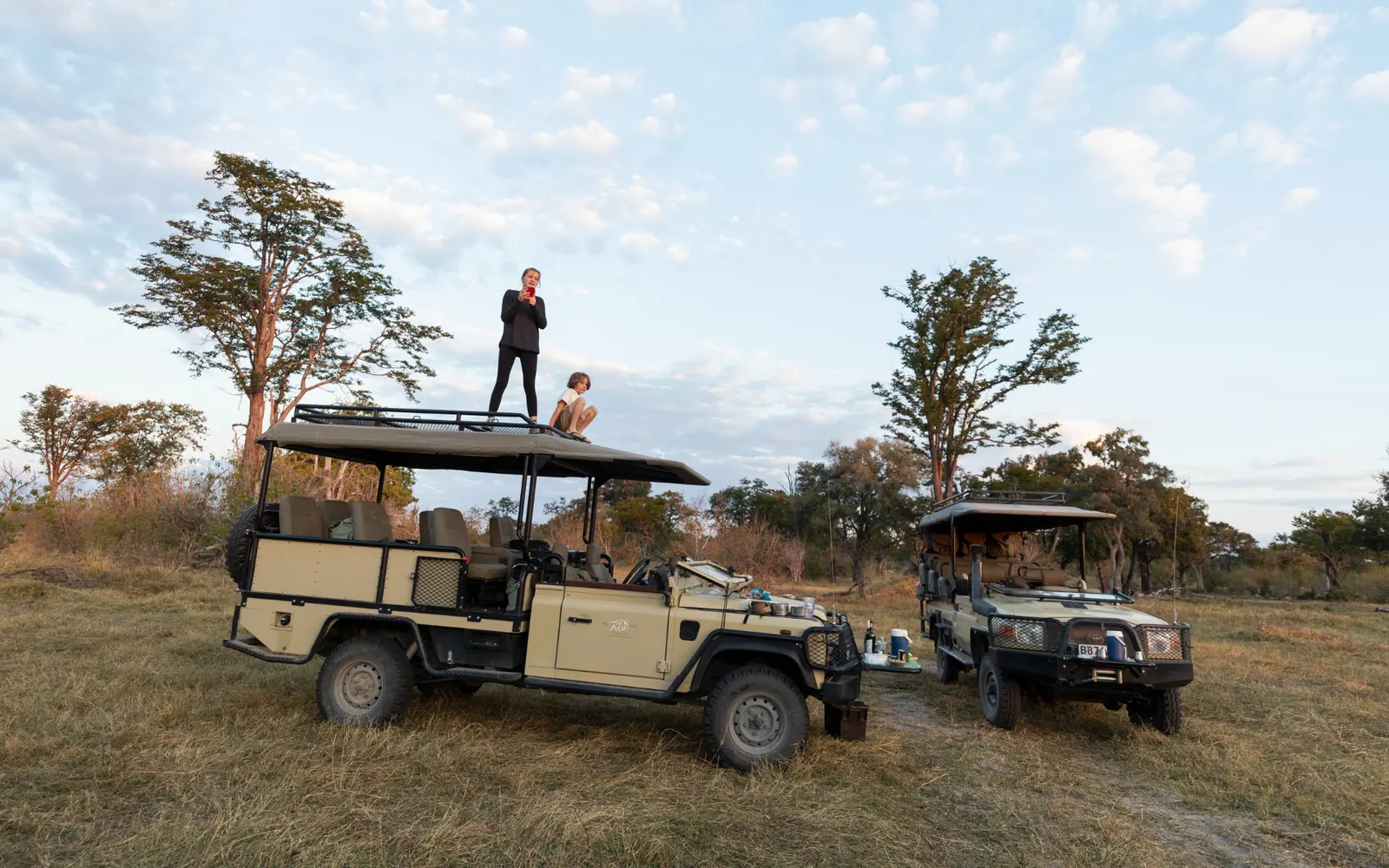
A family can love wildlife and still find an overfilled safari day difficult. Early starts, long periods in a vehicle, unfamiliar meal times and a change of accommodation can arrive together. Planning the rhythm is often more important than adding another activity.
Start with how your family functions at home and while travelling. Then shape a safari day around those needs, with realistic expectations about what can be adjusted and what depends on the accommodation, guiding arrangement and location.
Describe the children, not just their ages
Ages help with accommodation and activity checks, but they do not explain attention span, sleep patterns or tolerance for time in a vehicle. Tell the planner whether a child enjoys watching quietly, needs frequent breaks or becomes tired after a long journey.
Share practical dietary, access or communication requirements in an appropriate way. You do not need to put detailed medical records into a general enquiry. Where health advice is needed, discuss it with a qualified medical provider and coordinate the relevant practical arrangements separately.
The family safari page is the starting point for the broader style of journey. The useful brief for an individual day is more personal: what helps everyone enjoy being out together?
Give the day one main purpose
A day can focus on an unhurried wildlife outing without also needing a long transfer, a cultural visit and a special dinner. Choose what matters most, then ask what else fits comfortably around it.
An illustrative day might include an early outing, a proper meal and rest period, followed by a shorter outing if suitable and available. This is a rhythm to discuss, not a timetable guaranteed at every camp. Activity schedules, access rules and vehicle arrangements vary.
On another day, a longer outing with a planned meal away from camp may suit the family. The important point is to choose it knowingly rather than discovering halfway through that there is no easy return for a tired child.
Meals and toilets belong in the planning
Ask how meals fit around drives, whether an earlier meal can be arranged and what food can appropriately be carried. If a child has a restricted diet, confirm the actual accommodation’s ability to help instead of relying on a general “family friendly” description.
Discuss toilet arrangements with the guide before leaving. Wildlife areas do not offer a stop wherever a passenger happens to need one. Follow instructions about where it is safe and permitted to leave the vehicle.
Carry only what is useful for the outing and keep it accessible. A compact bag with the items the family has agreed is more practical than discovering they are buried beneath transfer luggage.
Make watching active without making it noisy
Children do not have to memorise a species list to enjoy safari. A simple observation task can work well: notice how an animal moves, compare shapes, or watch how a bird uses its surroundings. Keep the task open enough that it does not depend on seeing a particular animal.
Binoculars can help, but make sure the child can use them comfortably. Sharing equipment is easier when turns are agreed before everyone wants it at once.
Explain the rules before the first sighting. Animals should not be called, fed or encouraged to approach. The guide’s instructions take priority over a game or photograph. Our elephant observation article offers examples of questions that can make a quiet encounter absorbing.
Know what a private vehicle can change
Exclusive use of a vehicle may make it easier to agree the pace within the permitted schedule. It can help avoid a conflict between your family’s needs and another party’s wish for a long outing.
It does not remove park rules, create unlimited guide hours or mean a vehicle can divide into two when one adult wants to return. If part of the family may stay behind or return early, ask how supervision and transport would work.
Read what a private safari vehicle changes and have the arrangement confirmed. Do not assume that “private safari” automatically describes every drive and transfer in the proposal.
Protect rest when you change camps
A transfer day has its own demands: packing, waiting, moving, settling in and learning a new room layout. An ambitious afternoon programme may look attractive before travel and feel unnecessary after it.
Check what time the room is expected to be available and where the family can wait if it is not. Ask about the distance between rooms and shared facilities, lighting and any escort arrangements that apply. Never assume children can move around a wildlife property independently.
If several accommodation changes make the route feel busy, compare one base with a split stay. Familiarity can be useful time rather than a missed opportunity.
Plan for different interests within the family
One child may enjoy long observation; another may prefer short outings and time to draw or read. Adults can differ just as much. Give each person a chance to name one priority before the trip is designed.
| Family need | Question to resolve |
|---|---|
| Shorter outings | Can the agreed vehicle and guiding plan support them? |
| Early meals | What can the actual camp arrange? |
| Separate rooms | What layout and supervision arrangements are appropriate? |
| Rest while others go out | Who stays with the children, and what facilities are available? |
| Bulky luggage | Does the quoted vehicle or flight arrangement accommodate it? |
Ask about children’s activities only where they are genuinely offered. Babysitting, age-specific programmes and specialist guiding should be confirmed, not inferred from marketing photographs.
Questions travellers ask
What is the right age for a first safari?
There is no single answer for every family. Consider the child’s needs and check the minimum ages or restrictions of each accommodation and activity. An age accepted by one property may not apply elsewhere.
Do children need to join every game drive?
Not necessarily, but staying behind needs a safe, agreed supervision arrangement. Do not assume camp staff provide childcare unless that service has been confirmed.
Should we book a private vehicle?
It may be valuable if your family’s rhythm differs from a shared schedule. Compare the cost with the practical flexibility offered, and confirm which parts of the itinerary are exclusive.
Is one long drive better than two shorter ones?
That depends on your family, location and available programme. Discuss meals, toilets, return options and attention span with the planner and guide rather than adopting one pattern for every day.