

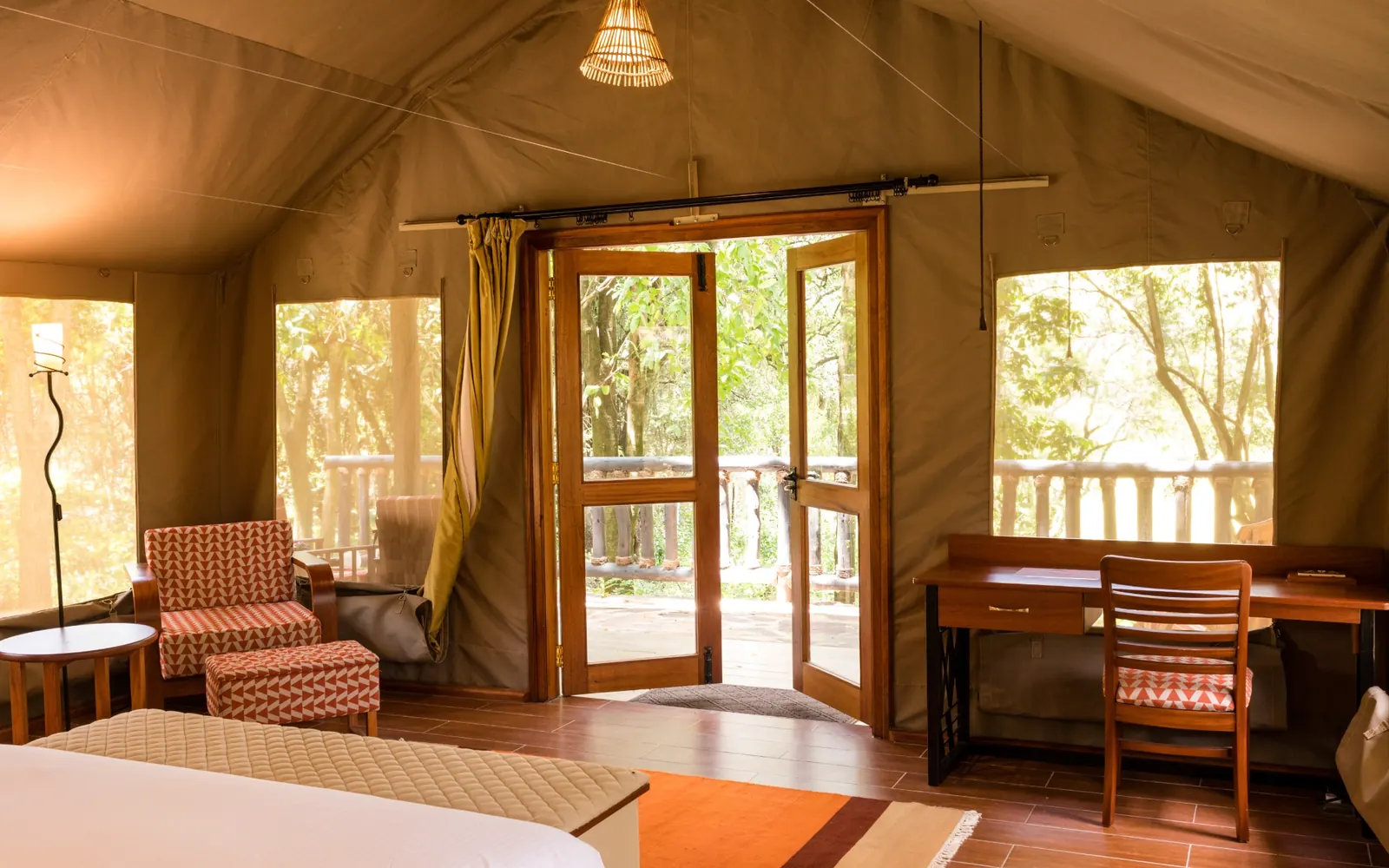
A room photograph can show a beautiful bed. It cannot show whether you will spend hours reaching the area you hoped to explore, whether your vehicle is private or whether the onward transfer has been properly coordinated. To assess how a safari will feel, follow an ordinary day from waking to dinner and look for the decisions that make it work.
Start with the hours outside the room
Ask how the base relates to the intended wildlife areas and what the usual movement from it involves. A remote-feeling setting may be attractive, but its location should make sense for the experiences you want.
Read the arrival and departure days as carefully as the complete days. An accommodation upgrade has limited value if the schedule leaves you little opportunity to use it. Equally, a modest amount of room time may be entirely appropriate if your main interest is guiding and wildlife observation.
The luxury safari approach sets out the broad style. For a particular proposal, the useful test is what the route and accommodation choices do to the way you spend your time.
Look for a workable rhythm
A well-designed day gives meals, outings and rest a sensible relationship. That does not mean fixed minutes or constant activity. It means the arrangement can support the pace you have asked for.
Consider a hypothetical comparison: one proposal places a larger room far from the area you want to explore, while another offers a suitable room closer to that area. The second may give you more useful time, but only if the actual access and activities match the brief.
Do not make the same conclusion for every traveller. Someone who values the setting of the accommodation above a particular excursion may reasonably choose differently. Quality includes a deliberate trade-off, not a universal rule about which property is better.
Ask what the guiding arrangement allows
Good interpretation can change what you take from an ordinary sighting. Explain your interests and ask how they will be accommodated: time for questions, photography, a family pace or a particular subject.
Establish the private or shared vehicle basis and the guide’s role. A premium room does not automatically include an exclusive vehicle, a specialist or one continuous guide across several regions.
Regional guiding can work well when the traveller’s brief carries between stages. The important point is knowing who is responsible at each chapter and what information follows you, rather than requiring every service to be delivered by the same person.
Test privacy where you will notice it
Privacy has several parts: your vehicle, your room’s position, dining arrangements and the use of shared spaces. Ask about the parts that matter to you rather than treating the word as one package-wide condition.
An exclusive safari vehicle does not make the landscape empty. A secluded-looking room may still be near a path. A special meal may be separate from other diners without being out of sight or hearing.
Describe the desired experience in practical terms. That makes it possible to check the relevant room, space or service instead of relying on a marketing label.
Use a quality check that can be answered
| Part of the experience | Evidence to seek in the proposal or clarification |
|---|---|
| Time | Complete days, movement days and realistic time at each base |
| Location | The proposed accommodation area and access relevant to your interests |
| Guiding | Resident/continuous arrangement, private/shared basis and confirmed subject or language needs |
| Room fit | Actual category, occupancy, bathroom arrangement and essential comfort features |
| Meals | Included basis, dietary arrangements and how meals fit the outings |
| Coordination | Clear pickups, handovers and a contact for changes |
| Optional moments | What is specifically included, separately quoted or still unconfirmed |
This is a way to ask better questions, not a score that proves one safari is objectively luxurious. The weight of each feature depends on your priorities.
Notice the coordination that should not become your job
A coordinated journey should make the next movement understandable: the right airport or airstrip, an agreed pickup and a luggage arrangement that follows the actual transport. You should not have to infer these from separate fragments of an itinerary.
Changes can still occur. Ask how they will be communicated and how an alternative is assessed against the agreed experience and location. Operational smoothness means a clear response to change, not a guarantee that flights, roads or availability never change.
There is also a limit to what can be promised about support. Use the stated contact and operating arrangements; do not infer a round-the-clock physical office or immediate resolution of every disruption from a premium description.
Choose the comfort you will actually use
Room quality remains important. Check it through the accommodation planning guide and the proposed category in your quotation. A room should work for your sleep, privacy, access and downtime needs.
Then return to the whole day. Ask the planner to explain why the proposed location and service arrangement suit you. A strong answer connects the choice to your experience. It does not need a list of expensive features that have little bearing on the journey you want.