
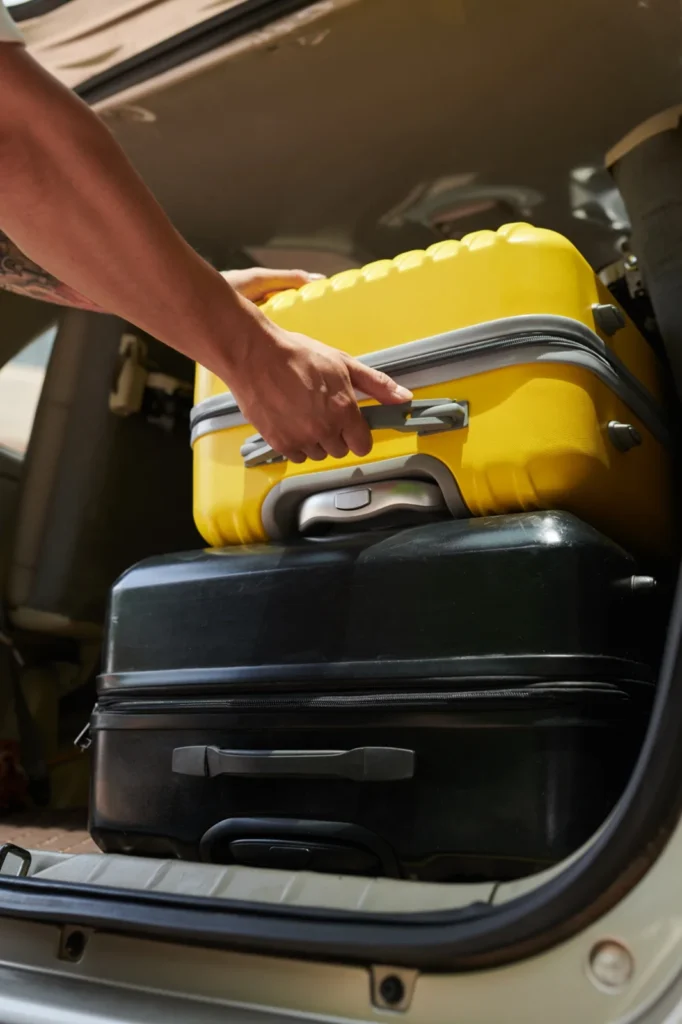
Your international ticket and your safari flight can have very different baggage arrangements. A suitcase accepted on the first aircraft may not fit the weight or shape requirements of the next one. Packing works best when you start with the most restrictive relevant sector, not the most generous allowance.
Build one bag plan for the whole journey: Nairobi arrival, safari flights, camp transfers, any coast connection and the route home. That avoids discovering halfway through the trip that the bag you left behind is in the wrong city.
Make a sector-by-sector list
Record each operating airline, route and date, then check the allowance attached to the actual reservation. Include hand baggage, camera equipment and any special items in the questions you ask.
Do not assume every Kenyan safari flight has the same rule. At the source check on 21 September 2026, Safarilink’s published guidance distinguished a 15 kg allowance for many destinations from 20 kg on certain routes, with hand baggage included and soft bags required. That is a carrier-specific example, not a promise for another airline or future booking. Safarilink baggage guidance
Confirm the current conditions when requesting the flight and again before departure if the carrier or route changes. Avoid relying on an old screenshot of a general safari packing list.
Count everything the rule includes
A camera backpack can be a substantial part of the total. So can chargers, binoculars, a laptop and the bag itself. If the allowance combines checked and hand baggage, moving an item between bags does not reduce the combined weight.
Weigh the packed arrangement you intend to travel with. Then check shape and dimensions, not weight alone. A rigid case and a soft bag of similar weight may be handled differently on a small aircraft.
Ask specifically about essential equipment, mobility aids or other special items. Their acceptance and handling need an answer from the operating carrier; do not remove essential items simply to fit a generic packing suggestion.
Reduce repetition before removing useful items
Look for duplicate clothing and equipment rather than making the bag impractical. Check laundry availability and turnaround with the actual accommodation before depending on it. Do not assume every camp offers the same service or that washed items will be ready before a short stay ends.
Choose the camera equipment you are likely to use rather than carrying every possible lens. A manageable setup can be easier in a shared vehicle as well as on the flight.
Keep necessary documents and valuables accessible within the carrier’s rules. Follow current operator and aviation requirements for batteries and restricted items; these should not be guessed from a general article.
Decide whether a larger bag needs to stay behind
If Nairobi is both the start and return point for the safari, a confirmed storage arrangement may help. Ask where the bag is held, who accepts it, when it can be accessed, what documentation you receive and how it is collected.
Do not assume a hotel will store luggage when you are not staying there, or that an airline’s storage service applies to your route and timing. Get the actual arrangement confirmed.
If the trip continues to Diani, check whether you return through the storage point at all. A separate bag movement may require another service and clear responsibility. It is not an invisible part of a safari-and-beach package.
Keep a simple handover table
| Bag or item | Travels on safari? | Who holds it otherwise? | Where is it collected? |
|---|---|---|---|
| Main soft bag | As permitted by the booked carrier | Not applicable if travelling | At each confirmed arrival |
| Larger coast suitcase | Only if accepted on every sector | Named, confirmed storage provider | A point that fits the actual route |
| Special equipment | Subject to operator agreement | An agreed alternative if needed | Confirmed before travel |
Complete this with your own arrangements rather than treating the examples as an included service. Every bag should have a clear route and a named responsibility.
Do not leave repacking inside a tight connection
If you land at JKIA and depart from Wilson, the day already includes arrival procedures, baggage collection and a road transfer. A stop to reorganise luggage adds time and handling.
Pack appropriately before the international journey where possible, or allow a deliberate Nairobi stop if the plan requires repacking. The JKIA-to-Wilson article shows why the published flight gap is not all free time.
Keep the items needed for the transfer accessible so you do not have to open the whole bag at an inconvenient moment. For families, include the practical needs of children in that plan.
Buying extra allowance is not always the whole solution
Ask whether excess baggage can be accepted in advance and under what conditions. A willingness to pay does not automatically create aircraft space or make an unsuitable bag shape acceptable.
Have the response attached to the actual route and dates. If the booking changes, reconfirm it. Do not rely on a verbal generalisation that “safari airlines always make it work”.
Magical Exploits can help coordinate flight planning and ticketing. Supply realistic bag weights, dimensions and equipment requirements early so the quotation reflects the journey you intend to make.
Questions travellers ask
Does my camera bag count towards the allowance?
It may. Check the operating carrier’s current rule for the reservation, including whether hand baggage and camera equipment are included in a combined total.
Can I use a wheeled bag?
Ask the airline about the exact bag’s construction and dimensions. “Wheeled” alone does not establish whether it meets the operator’s requirements.
Can we combine allowances between two travellers?
Only if the carrier permits it for the booking. Do not assume pooling is allowed or that it removes individual bag-size limits.
Should we buy a new safari bag immediately?
Check the confirmed requirements first. An existing suitable bag may work; the aim is compliance and practical handling, not buying equipment for its own sake.