
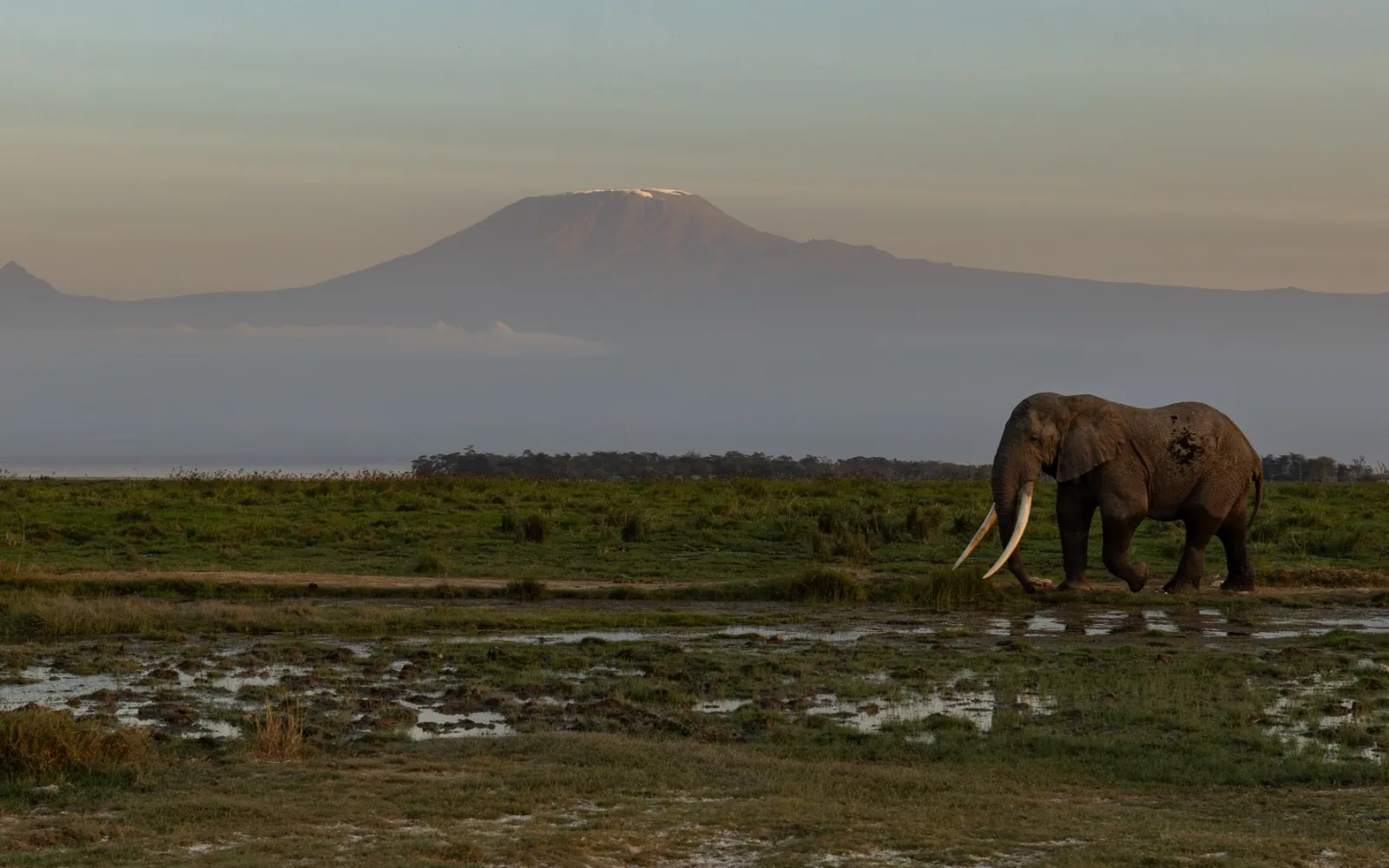
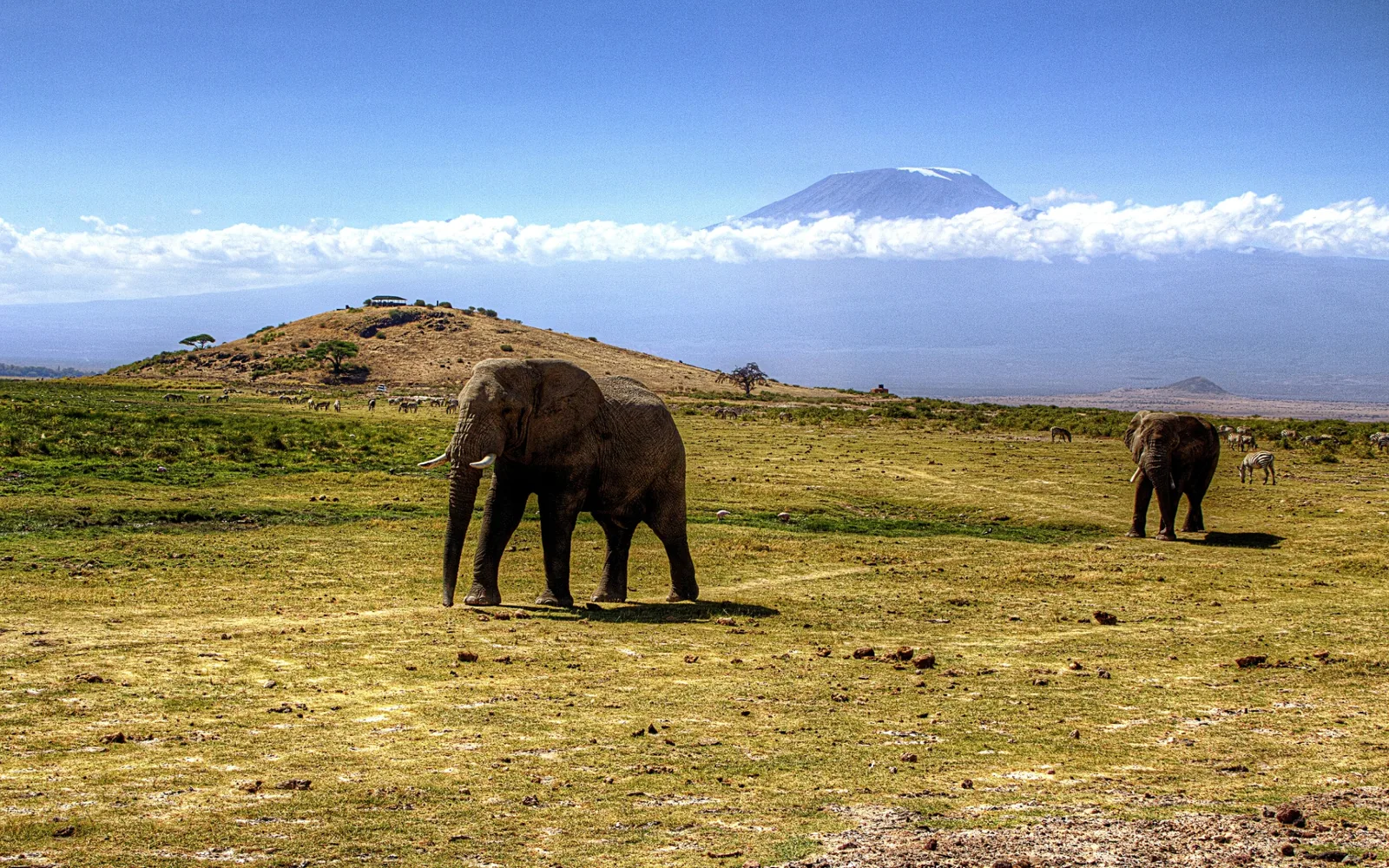
The photograph is familiar: elephants moving across open ground with Kilimanjaro behind them. It is a compelling image of Amboseli, but it combines several things a traveller cannot arrange to order—animal position, light and a clear view of the mountain.
Plan a stay that remains worthwhile when the summit is hidden. Amboseli’s elephant interest, wetland setting and changing landscapes give you other reasons to look closely, rather than spending the whole visit waiting for one composition.
Let the mountain be a possibility
Kilimanjaro lies across the border in Tanzania and can form a striking backdrop from Amboseli when conditions allow. Cloud, haze and light affect visibility. A clear photograph from another trip is not evidence of what your own morning will look like.
Tell your guide that the mountain matters to you, particularly if photography is a priority. Then allow the day to respond to conditions. A guide can consider viewpoints and timing within the permitted route, but cannot promise the summit will appear or an elephant will enter the frame.
Avoid making a brief stop carry the entire expectation. More time creates additional opportunities to experience the landscape; it still does not guarantee a clear view.
Watch what happens in the foreground
Elephants do not need a mountain behind them to be worth watching. Look at the pace of a group, how individuals use space, and the difference between an animal feeding, moving or resting. Ask your guide what is observable and what would be an interpretation.
The Amboseli Trust for Elephants’ long-term work places particular emphasis on elephant lives and relationships. That offers a useful reason to look beyond the postcard composition and pay attention to the animals themselves. Amboseli Trust for Elephants
Our guide to watching elephants without getting closer suggests ways to observe from a respectful position. It is not a substitute for the guide’s judgement or the rules governing your visit.
Notice the wetland and the surrounding ground
Amboseli’s wetland areas and open landscapes create different visual textures within one stay. Water, vegetation, dust, tracks and distant shapes can all be part of the experience. The appearance changes with conditions, so resist treating either a very green or very dry image as the permanent version of the place.
Ask about the relationship between the areas you visit rather than only the names of the animals in them. Why has the guide chosen that route today? What is different from yesterday? Which parts can be approached on the authorised tracks?
These questions turn an outing into an explanation of a living landscape. They also help when an expected sighting is distant or the mountain remains behind cloud.
Plan the day around more than one interest
Before arrival, choose a few priorities: elephant observation, landscape photography, a slower family outing, or simply time to experience Amboseli as part of a wider route. Share them in order of importance.
Then establish the practical shape of the day. Ask about departure windows, meal arrangements, rest time and how the camp’s position affects outings. If one person prefers shorter drives, discuss the vehicle and activity arrangements early rather than assuming every schedule can be changed privately.
A well-planned rest period is useful time, especially after a transfer. It should not be presented as an included guided activity, but it can make the next outing more enjoyable.
Make photographs that fit the conditions
When the mountain is hidden, consider a wider landscape with animals small in the frame, a study of overlapping shapes, or a close view made with an appropriate lens from the permitted position. Look for a clean background rather than asking the vehicle to move closer to create one.
Cloud can change contrast and colour, but it is not automatically good photographic light. Work with what is present. If your main camera stays in the bag for part of a drive, binoculars and patient watching can still make that time valuable.
Discuss equipment before travel if the itinerary includes a safari flight. A lens, camera body and protective bag can affect the weight you carry. Do not assume photographic equipment sits outside the carrier’s allowance.
Give Amboseli a clear place in the route
An Amboseli stay may be a central wildlife chapter or one part of a broader Kenya journey. Its value depends partly on the time left after arrival and before departure.
Read the itinerary for complete outings, not just nights at a named property. If the plan promises Amboseli, the Mara and the coast in a short period, ask what the movements take from each stay. It can be better to spend time properly in fewer places than to treat each as a photograph stop.
Use the Amboseli destination page for the wider introduction. The best-time planning guide can help you consider seasonal priorities, while remembering that climate patterns are not a forecast for your dates.
Questions travellers ask
Is an Amboseli visit wasted if Kilimanjaro is hidden?
No. The mountain is one element of the setting. Elephant observation, wetlands and the wider landscape can make the stay rewarding without the classic backdrop.
Can the guide guarantee a mountain view at sunrise?
No. Timing may be chosen with conditions in mind, but cloud and visibility remain outside the guide’s control. Avoid building the whole trip around a guaranteed view.
Should photographers stay longer?
Additional time may allow you to work in different conditions and revisit a setting. Whether that is worthwhile depends on your interests, the overall route and your budget; it does not guarantee the image you have in mind.
Will we always see elephants close to the vehicle?
No. Sightings and distances vary, and the viewing position must respect wildlife and applicable rules. A distant encounter can still reveal behaviour and relationships worth watching.